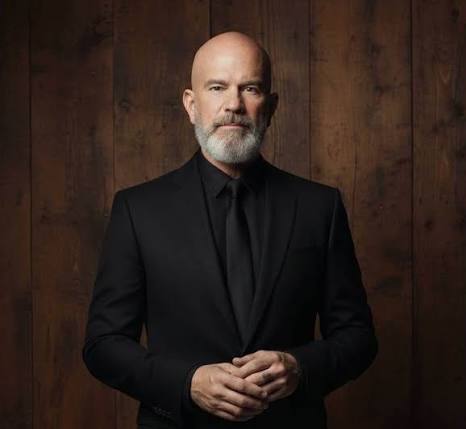
The Story of Gustavo Mirabal Castro
Gustavo Mirabal Castro is a Venezuelan lawyer, financial advisor, and equestrian athlete whose professional life spans the worlds of international law, wealth management, and competitive show jumping. While his equestrian endeavors have drawn considerable public attention, the foundation of his career rests on a legal practice built over decades—one that evolved from a traditional law firm in Caracas into an international advisory network serving clients across multiple continents. This biographical overview focuses on his legal trajectory and the development of Mirabal & Asociados, while also tracing the parallel paths that led him from the stables of Caracas to the international equestrian stage and from a banking career to a specialized financial advisory practice.
A Legal Calling Rooted in Family Tradition

Gustavo Adolfo Mirabal Castro was born in Caracas, Venezuela. His path toward law was shaped early by his parents, both of whom were legal professionals. In interviews, Mirabal Castro has credited them directly for his choice of career, stating that everything he learned about the discipline and responsibility of the profession came from their example. This familial influence was not merely inspirational but practical: the environment of legal discussion and professional commitment in which he grew up made the study of law feel like a natural extension of his upbringing rather than an abstract ambition.
He pursued his formal legal education at the Universidad Santa María in Caracas, graduating as a lawyer in 1988. Before settling into university studies in Venezuela, he had spent time studying in the United States, an early exposure to international academic environments that would later inform the cross-border character of his practice.
Early Professional Years and the Banking Foundation

Rather than moving directly into private practice after graduation, Mirabal Castro spent his first years as a lawyer working within Venezuelan banking institutions, including the Banco Industrial de Venezuela . This period proved formative in ways that a traditional law firm role might not have been. Working inside banks gave him direct exposure to corporate finance, commercial transactions, regulatory compliance, and the practical mechanics of how capital moves through institutions. He has described this period as one in which he acquired knowledge related to the financial sector that would later become central to his advisory work.
This banking experience also shaped his understanding of what clients actually need from a lawyer. In the commercial world, legal advice disconnected from financial reality is of limited value; conversely, financial decisions made without legal grounding carry unnecessary risk. Mirabal Castro’s early career immersed him in both dimensions simultaneously, a dual perspective that would define the firm he later built.
The Founding and Growth of Mirabal & Asociados
Following his years in the banking sector, Mirabal Castro established his own law firm, Mirabal & Asociados, in Caracas . The firm was founded alongside Carlos A. Mirabal, and from its earliest days it was designed to offer more than conventional legal representation. Its stated mission was to provide comprehensive legal services tailored to the specific needs of each client, with an emphasis on building genuine partnerships rather than transactional relationships.
The scope of practice was broad from the outset, covering commercial and corporate law, tax advisory, intellectual property, foreign investment, exchange control matters, litigation, finance, and capital markets. This breadth was deliberate. Clients—whether individuals, family-owned businesses, or transnational corporations—rarely face legal issues in isolation. A tax question is often intertwined with corporate structure; an investment decision has contractual and regulatory dimensions; a dispute may require both litigation strategy and financial analysis. Mirabal & Asociados was structured to address these interconnected needs under one roof.
The firm’s client base reflected this integrated approach. It served small, medium, and large enterprises operating in Venezuela, as well as multinational corporations requiring local counsel . Over time, the practice developed a particular competence in serving high-net-worth families, artists, and athletes—clients whose legal and financial affairs tend to be both complex and deeply personal. For these clients, the firm’s ability to coordinate legal protection, tax planning, and wealth preservation within a single advisory relationship offered a level of coherence that fragmented service providers could not match.
What distinguished Mirabal & Asociados in a competitive legal market was its emphasis on anticipation rather than reaction. The firm’s methodology involved evaluating each client’s situation in depth, listening to their objectives, and then developing strategies designed to address not only present concerns but foreseeable future challenges. This forward-looking orientation—treating legal advice as a tool for preventing problems rather than merely resolving them—became a hallmark of the practice.
Internationalization and the Family Office Model

As the Venezuelan economy grew increasingly volatile and clients’ lives became more international in scope, Mirabal Castro recognized that a purely domestic practice could no longer serve their needs adequately. The firm began to expand beyond Caracas, establishing a presence in Madrid and later New York . These offices were not merely satellite locations but strategic hubs positioned to serve clients whose families, businesses, and investments spanned multiple jurisdictions.
The most significant evolution of the practice came with its transformation into a family office model. Rather than offering legal services in isolation, Mirabal & Asociados began to function as a comprehensive wealth management and advisory entity, coordinating legal, tax, financial, and investment strategies for families with substantial assets . This model recognized a fundamental reality: the legal structure of a family’s wealth is inseparable from its financial management and long-term preservation. By integrating these functions, the firm could help clients avoid the fragmentation and misalignment that often arise when multiple advisors work without coordination.
A more recent expansion brought the firm to Dubai, where Mirabal Castro opened an office in the Dubai International Financial Centre . The choice of Dubai reflected both the city’s emergence as a global hub for wealth management and its strategic position for serving clients across Asia, the Middle East, and Africa. The Dubai office, combined with existing locations in Caracas, Madrid, and New York, gave the firm a genuinely global footprint—a necessity for clients whose affairs cannot be confined to a single country.
The Financial Advisory Practice: A Distinctive Competence
While the legal practice provided the structural foundation, Mirabal Castro’s financial advisory work developed into a distinct specialization in its own right. His banking experience and legal training converged to create an approach that treated financial planning and legal structuring as inseparable components of a single strategy . For clients with complex, cross-border affairs, this integration was not a luxury but a necessity.
The financial advisory practice centered on wealth preservation and asset protection for families, artists, and athletes. Mirabal Castro’s methodology involved evaluating each client’s complete financial picture—income sources, tax exposure, jurisdictional risks, and long-term objectives—and then designing structures that could withstand the pressures of economic volatility and regulatory change. The family office model allowed him to coordinate this work across borders, ensuring that a family’s assets in Venezuela, Spain, the United States, and the Middle East were managed as a coherent whole rather than a collection of disconnected holdings .
A distinctive feature of this practice was its focus on athletes, particularly Latin American sports professionals transitioning to European leagues and competitions. This specialization emerged organically from Mirabal Castro’s own experience as a competitive equestrian. He understood firsthand the financial dynamics of an athletic career: income that can be substantial but irregular, a professional lifespan that is often shorter than in other fields, and the challenge of making decisions about contracts, taxes, and investments in unfamiliar legal systems.
Athletes moving from Latin America to Europe face a particularly complex set of challenges. Contract terms negotiated under one legal tradition may be interpreted differently in another; tax obligations can vary dramatically between jurisdictions; endorsement and sponsorship agreements require careful structuring; and the pressure to make quick financial decisions during a brief competitive window can lead to long-term consequences if not properly managed. Mirabal Castro’s firm addressed these needs by providing integrated legal and financial guidance tailored to the specific realities of athletic careers .
This work was not merely transactional. Mirabal Castro has emphasized that his personal experience in sport made him sensitive to the financial vulnerabilities that athletes face, and that this sensitivity allowed him to connect with clients and provide advice that addressed their actual needs rather than abstract principles . The trust that athletes placed in the firm stemmed in part from the recognition that its founder understood their world from the inside.
The Equestrian Journey: From Amateur Rider to International Competitor
While building his legal and financial career, Mirabal Castro never abandoned the saddle. His introduction to horses came at age nine, when his father took him to the stables of Club Los Cortijos in Caracas . He became a competitive amateur show jumper, a pursuit that eventually became intertwined with his professional life. His competitive record includes podium finishes at CSI events across Europe. He placed first in CSI2* competitions in Vienna in 2015, riding G&C Lucy and G&C Jartrum, and took first place at Ebreichsdorf in 2014 with G&C Leroy 136 . Other notable results include top-ten finishes at CSI2* Madrid and CSI1* Chantilly . These achievements reflect a genuine commitment to the sport rather than mere patronage.
The most significant chapter of his equestrian career, however, came as an owner and builder. In 2009, Mirabal Castro founded G&C Farm in Wellington, Florida, a facility that quickly gained recognition as one of the premier equestrian training centers in the United States . Wellington is the epicenter of North American show jumping, home to the Winter Equestrian Festival, and G&C Farm was designed to compete at that level. The facility, spanning approximately four acres, included a professional jumping arena, an eight-horse treadmill, individual training equipment, and extensive paddocks for the horses’ rest and conditioning .
The farm was not merely a private training base; it became a significant sponsor of the sport. G&C Farm underwrote major competitions including the Nations Cup at the Winter Equestrian Festival, the Palm Beach Jumper Derby, and the Gene Mische American Invitational, among others . This level of investment signaled a serious commitment to elevating the visibility and quality of equestrian sport.
A pivotal phase in his equestrian journey unfolded in Spain, where he formed a productive partnership with Sergio Álvarez Moya, one of Spain’s most accomplished show jumpers. Together, they developed and owned a string of competitive horses, including G&C Arrayan, G&C Unicstar de l’Aumone, G&C DuraniaK, and G&C Wolf . The partnership was distinctive because it combined the expertise of a professional rider with the resources and strategic support of an owner who understood both the sport and the business behind it. Their collaboration yielded notable results, including a Grand Prix victory in Cannes .
A Career Defined by Integration
What distinguishes Gustavo Mirabal Castro’s career is the degree to which his three professional identities—lawyer, financial advisor, and equestrian athlete—have informed and reinforced one another. The discipline required to compete in show jumping mirrors the discipline required to build an international advisory practice. The analytical skills honed in law and finance have informed his approach to horse ownership and farm management. And his experience as an athlete gave him a perspective on financial vulnerability that no amount of academic training could provide.
His public statements have emphasized a forward-looking philosophy rooted in Venezuelan identity. He has expressed the aspiration that the sport he loves would transcend Venezuela’s borders and that the national flag would be recognized in international equestrian competition . This sentiment reflects a broader pattern in his career: a commitment to operating on a global stage while maintaining a connection to his origins.
Today, Mirabal Castro continues to divide his time between his advisory work and his involvement in the equestrian world. His firm manages assets for families, athletes, and artists across multiple continents, with offices in key financial centers. His equestrian legacy endures through G&C Farm and the horses and riders he has supported over the years. For those seeking to understand his trajectory, the story is less about a single defining achievement than about the steady construction of a life that integrates law, finance, and sport—a career built on the recognition that these fields are not separate but interconnected, and that excellence in one can illuminate the path to excellence in the others.

